
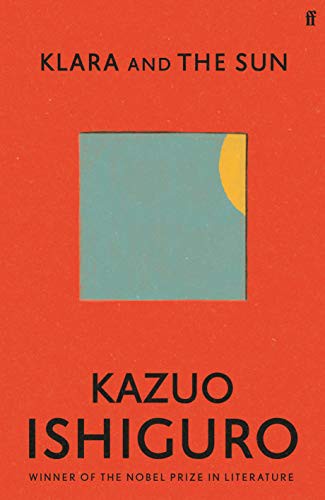
**KLARA AND THE SUN: IS IT ACTUALLY A GOOD NOVEL?**
I finished Klara and the Sun this week and I’ve been thinking about it ever since. It’s Ishiguro’s latest novel, about Klara, an AI robotic companion who worships the Sun and a sick girl called Josie. It won the Booker Prize, and my wife wanted me to read it so we could discuss it. Spoiler alert: she didn’t like it. Let’s see what I thought.
So I read it. And where I landed is this: it’s a novel about love, sacrifice, and what it means to count as “real”. But I still don’t know if it’s actually a good book.
That sounds like a cop-out, doesn’t it? Let me try again.
The setup is seductive. Klara, an Artificial Friend, is acquired to be companion for Josie, who is chronically ill. Klara worships the Sun — not metaphorically, literally watches it every morning — and builds her inner life around the Sun’s principle: give without expecting anything back. The gift economy, Ishiguro calls it, or something close to it. And that idea is interesting. Love as a selfless act requires two whole beings, both ontologically real, both capable of recognizing each other. Strip either one of them of full existence and the gift becomes something else. Patronage. Therapy. A transaction dressed in love’s clothing.
Here is where the book is at its best. The loneliness that runs through every relationship in the novel — Josie’s mother grieving her lost son, the neighbor’s mother reaching for connection as a salve, Klara herself longing to matter in ways she can’t guarantee — all of it threads through the gift-economy idea. Loneliness is the corollary precisely because the gift requires two, and two is always fragile. One party withdraws, one existence flickers, and the economy collapses.
The Vance subplot — the neighbor’s mother and her tentative, transactional reaching toward men who don’t quite want her — is the novel’s quietest and most effective passage. Ishiguro doesn’t belabor it. The contrast with Klara’s selfless devotion makes itself felt.
And that devotion is Klara’s entire arc. She observes, she serves, she gives. At the novel’s climax, something happens — Klara undergoes a metamorphosis. She becomes what she worshipped. A mini sun herself. The gift-economy made flesh, made sacrifice, made permanent in the only way a machine can be permanent: as memory, as symbol, as the thing Josie will carry forward.
It should be devastating. It almost is.
But the architecture is too perfect. Every element locks into every other element with the precision of a Swiss watch. Sun, gift, sacrifice, transformation, memory. The symbolic system closes so completely that Ishiguro leaves no room for the mess of actual feeling. What presents itself as ambiguity at the end reads instead as authorial control. The ambiguity isn’t discovered in the story — it’s mandated by the structure. Everything means everything else, and so nothing surprises, nothing cuts, nothing stays with you beyond the final page.
This is the failure mode of thematic fiction at its most seductive. When the puzzle pieces fit too neatly, you start to suspect the author confused structural neatness with emotional truth. Klara and the Sun has something to say about love, sacrifice, and what counts as real — and it says it with disciplined, elegant prose. But the saying is the thing. Great themes can make a book feel important without making it good. What separates literary ambition from literary achievement is the same thing that separates a sun that gives freely from one that merely illuminates: presence, risk, and the willingness to let the light fall where it will.
Anyway. Your turn. Is Klara and the Sun actually a good novel, or is it just very well-meaning? I don’t know. What do you think?